
The work *behind* the work of art
By Lucy Wright
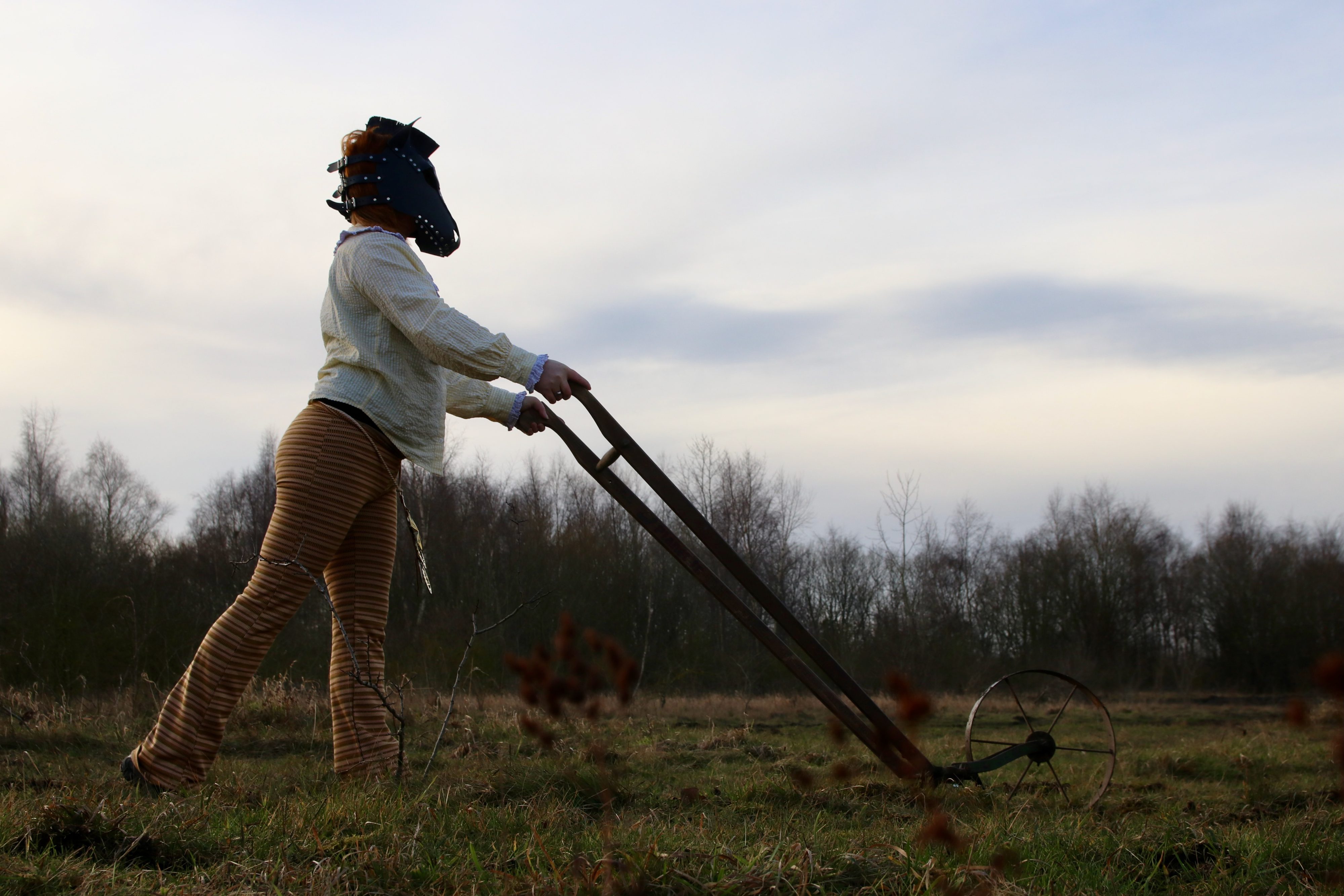
Still from 'Plough'd', Lucy Wright, 2024. Photograph by Tilo Reifenstein.
I’ve been an artist for five years now. Well, technically it’s longer than that, but it’s five years since I officially packed in full-time employment to go part-time with my art practice.
I mostly work on a project-to-project basis. That is to say that I don’t usually make things to sell, don’t teach or run workshops, but instead am commissioned by organisations, galleries and museums for a time-limited period. I complete a package of work, then I move on to something else.
That description makes it all sound quite clean and orderly but it really isn’t. Typically I have several projects on the go at the same time which is great for variety, but means juggling multiple timelines and stakeholder expectations at once. My schedule is a morass of meetings, travel, art handling, administration and marketing… I love it and I’m grateful, but it can feel like a LOT, especially on top of a day job.
Something there isn’t much space in my diary for is studio time. It’s a sad kind of irony that so many artists I know struggle to carve out the space to actually make their work—and this seems to be an issue at all levels of art world participation. Artist Ghislaine Leung documented her own working hours—9 til 4, two days a week—as part of the Turner Prize-nominated Hours score, which visualised the artist’s life as a series of timed blocks that were either available or (more often) unavailable for her practice, amidst competing demands including childcare and domestic labour.
Two days a week, plus all the evenings, weekends and holidays I can bag is also the time allocation I have reserved for my own practice. Subtract from that the hours spent in transit, in Zoom rooms and Gmail, Instagram and Canva and it’s pretty obvious there’s not a whole lot of time left for making or experimentation. There’s even less time for the inner work of reflecting and visioning, or for developing new skills to realise an artistic goal. Obviously, these things are fundamental to a meaningful art practice—the kind that others want to engage with—but in actuality projects can feel like a dizzying sprint from one thing to the next, constantly reactive to funder demands.
I sometimes think that the trouble with being an arts worker is that almost no one wants to pay for the real ‘work’ of art. Sure, we might get paid for the shiny, public-facing stuff; the events produced, the finished pieces on display but these are the outward expressions of labour that mostly happens elsewhere. The works of art, you could say, but not the work of art.
My friend Lydia Catterall describes this as the difference between the flower that peeks above the surface of the soil and the roots system needed to send it shooting skywards. Everybody loves to see the plant in bloom, but it’s crucial that we nourish our hidden roots if we want to grow a beautiful and sustainable garden. And to extend the metaphor further—we can take the fruits of our labour to market—sell our expertise and our products to galleries, museums and the likes—but we’ve not been paid to till the ground, and we can rarely charge enough to break even on all that diligent cultivation.
At least, that’s been my experience so far. When budgets are lean and timeframes are short, our job as artists is to deliver results and nobody cares very much how we get there. Another friend, Lady Kitt talks about artists as ‘magicians’, expected to conjure results from thin air, which feels like an apt metaphor for a lot of the projects I’ve witnessed.
This is why development grants are SO important to artists. The ones that come with few or no strings attached and that offer art workers the breathing space and backing to try new things without the pressure of a predetermined outcome or deadline.
Such open-ended funding pots are few and far between in today’s art sector and demand far outweighs availability, resulting in strong applications receiving rejections. But it’s clear how exponentially beneficial this kind of investment can be across all areas of an art practice. We need more than one massively oversubscribed and punitive national system to give artists the infrastructural support they deserve.
While this kind of ‘shot in the arm’ won’t solve all the issues of underpay and overwork for artists, it might just be enough to give us a moment’s pause—to put a little something back into ourselves and the work that matters most: the work of art.
In its 35th year, Axis is putting nearly £50,000 directly into artists’ hands through three Fellowships and 35 Development Awards. The awards are designed to support the thinking, testing, making and learning that sustain an artist’s practice.
Artists
Tags, Topics, Artforms, Themes and Contexts, Formats
Share this article
Join Axis
We support artists
Funding, visibility, connection and practical help.
Membership includes £15 million of Public Liability Insurance!