
Social Works?: Live was a one-day celebration of socially engaged art, attended by over 130 artists, producers, commissioners, academics, and participants.
Social Art for Equality, Diversity and Inclusion
SAFEDI
SAFEDI (Social Art for Equality, Diversity and Inclusion) was a partnership between Axis, Manchester Metropolitan University and the Social Art Network. Funded by the Arts and Humanities Research Council, it supported six artist commissions testing how socially engaged art can strengthen equality, diversity and inclusion, influence cultural policy and create more equitable opportunities in the visual arts.

Image: SAFEDI enSHRINE installation (Image description: orange text on white and purple recycled paper that reads 'access obstacles'). Photo credit Jules Lister.
What
February 2021 – April 2022
SAFEDI was a research partnership between Manchester Metropolitan University, Axis, and the Social Art Network. It supported social artists, together with audiences and commissioning organisations, to champion equality, diversity and inclusion (EDI) through artistic practice and lived experience.
Funded by the Arts and Humanities Research Council (AHRC) as one of ten pilot EDI Engagement Fellowships, SAFEDI featured six artist commissions designed to test how social-practice methods could influence cultural policy and institutional behaviour.
The project aimed to strengthen equality and inclusion in the visual arts and to improve opportunities for artists and audiences who have historically been excluded. It showed how social artists and the communities they work with can contribute directly to shaping policy and organisational change.
Background
SAFEDI built on earlier collaboration between Axis and Manchester Metropolitan University, including Validation Beyond the Gallery. This study, led by Professor Amanda Ravetz, Dr Lucy Wright and Mark Smith, examined how socially engaged artists could be better recognised and supported.
This work developed into the Models of Validation Knowledge Transfer Partnership (2017–2019), initiated by Mark Smith, Executive Director of Axis, which formally connected Axis and MMU as long-term partners. Building on this foundation, Professor Amanda Ravetz and Mark Smith submitted an expression of interest for the AHRC EDI Engagement Fellowships, which was accepted and led to the full development of SAFEDI.
The application and project rationale were co-developed with R. M. Sánchez-Camus, who at the time was working with Axis as a Development Associate. Following the award, R. M. Sánchez-Camus took on the role of Lead Artist for SAFEDI, working in partnership with Professor Amanda Ravetz, Axis and Manchester Metropolitan University to lead the direction of the programme and shape its delivery.
SAFEDI emerged during a period of reflection on equality and representation across the arts but was grounded in research already underway between Axis and MMU.
Four artist scholars from Manchester Metropolitan University, Dr Anna Macdonald, Dr Cesar Cornejo, Dr Kai Syng Tan, and Dr Patrick Campbell, joined the project team and contributed specialist research in neurodiversity, disability arts, anti-racist networks and social housing. Their academic insight shaped the design and focus of the six commissions. Daniela Liberati coordinated the commissions, and Sally Fort produced the independent evaluation.
Purpose
SAFEDI asked:
Who gets to participate in the visual arts, and how can participation become genuinely equitable?
The project paired socially engaged artists with arts organisations and community groups to test practical routes to inclusion that addressed parenting and care, race, disability, chronic illness and civic memory.
Through these six commissions, SAFEDI examined how social-practice methods could shape new relationships between artists, institutions and communities.
Despite the challenges of the pandemic, SAFEDI exceeded its goals and demonstrated how artist-led collaboration and research can inform cultural policy, reshape institutional behaviour and create lasting models for change.
The Six Artist Commissions
Each artist commission was supported by the lead artist, R.M. Sánchez-Camus, together with the artist scholars from Manchester Metropolitan University, who provided mentoring, reflection and knowledge exchange across the programme. Regular workshops and shared sessions created a learning network that connected the commissioned artists, researchers and partners.
enSHRINE
Sarah Li, Sofia Barton, Dan Russell and Lady Kitt
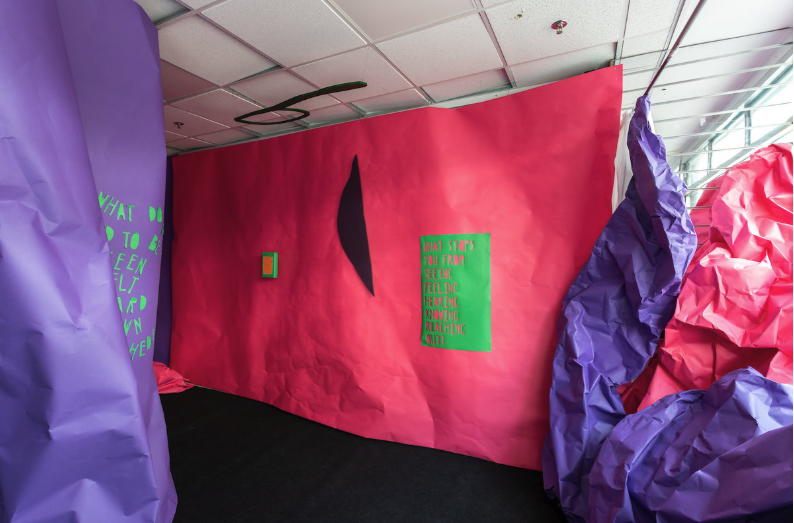
Working with artists and creatives with learning disabilities, including collaboration with Baltic Centre for Contemporary Art, this commission used papercraft, music and spoken word to explore why gallery spaces often exclude disabled people.
Sarah Li is a multidisciplinary artist exploring queerness and belonging. Sofia Barton works with heritage and identity through vibrant illustration. Dan Russell investigates labour and access within creative industries. Lady Kitt creates participatory papercraft and performance to question power and visibility. Together they developed creative and accessible methods for self-representation and advocacy.
"It’s an important piece. We are very proud to be involved. For me it does speak about exclusion in wider place making too. How less powerful people are can be ignored by those who should know and do better and the systems and collusion that allow this. Folx are often labelled moaners when they voice a valid and informed opinion, instead of being listened too. Such a great way of opening up dialogues."
Allie Walton-Robson, Creative Director, Headway Arts
Jar Squad
Carmen Wong, Rachel Dobbs and Tess Wilmot
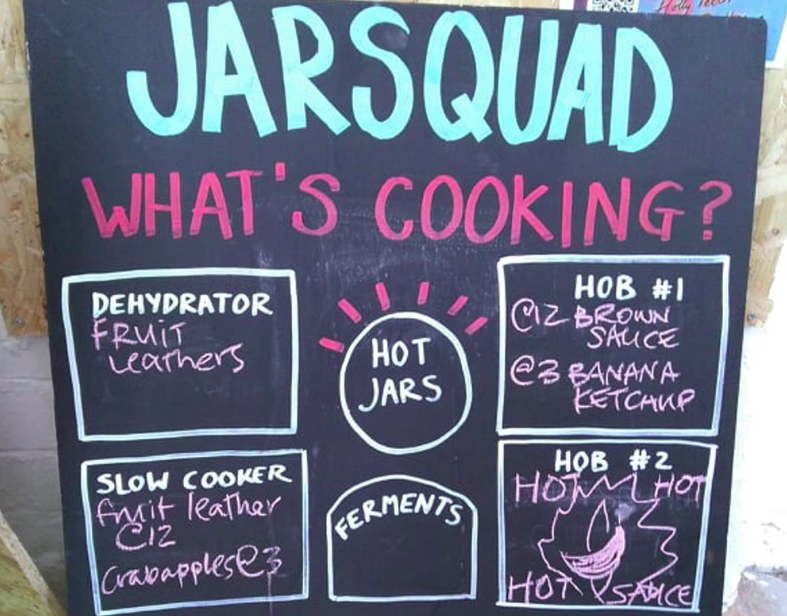
In partnership with Nudge Community Builders, this collective ran pop-up community gatherings that combined food preservation and conversation. Participants collected surplus ingredients and made preserves while sharing ideas about collaboration, care and exchange.
Carmen Wong is an artist and curator focusing on food justice and cultural exchange. Rachel Dobbs is an artist and educator committed to accessible learning. Tess Wilmot is a community gardener and facilitator promoting sustainable growing. Their project turned cooking and conversation into a creative model for social connection and mutual support.
"It’s been useful for us to think through how the notions of invitation, hospitality, relationship building and radical administration as critical to our artistic practice, and how these function practically within our feral business/social enterprise. Sally Fort (evaluator) was helpful in her observation that we, the artists were partnering with JarSquad (the project / organisation / business / community), and this led to deep and meaningful conversations with our initial partners Nudge, on what it means to take policy from paper into practice, and into our relationships with individuals and other organisations we interact with."
Carmen Wong, Rachel Dobbs and Tess Wilmot
The Village: Reimagining the Gallery or Museum Institution for Child-Rearing
Sarah Dixon and Sharon Bennett (Women’s Art Activation System)
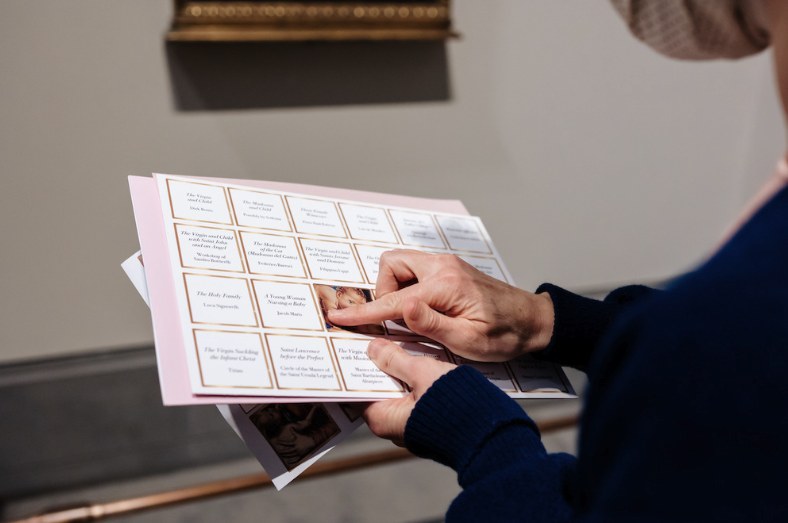
An informal collaboration with the National Gallery. Sarah Dixon and Sharon Bennett invited mothers and caregivers to document barriers they experience in cultural spaces. They created an “eye-spy” game to explore how motherhood is represented within collections and to prompt new conversations about family, care and creativity.
Their project advocated for greater recognition of care as central to artistic and institutional life.
"We have been intrigued by what is not visible in the Gallery. Many of the breastfeeding paintings are in storage. The paintings that are on display show a limited range of the reality of breastfeeding - we could relate to the varying latches and baby behaviours shown and also noticed that the representations are unanimously white, young and very serene - whether Goddesses, Virgins or simply Maternal. We are curious about what is not shown in art and cultural spaces. An ongoing investigation... "
Sarah Dixon and Sharon Bennett (Women’s Art Activation System)
Flatness Book Project
Shama Khanna
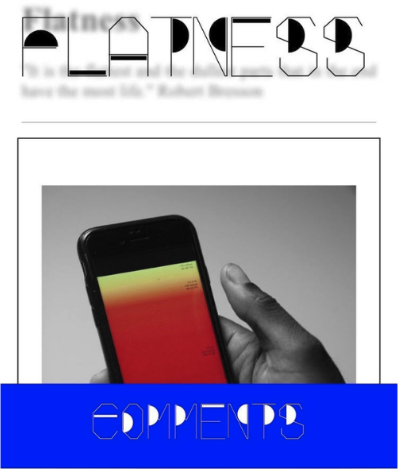
Working with not/nowhere, Shama Khanna expanded the long-term Flatness project into a collaborative online publication bringing together essays, images and artworks by Black people and people of colour.
The project explored digital publishing as a space for solidarity, conversation and creative resistance, using networked technology to build a living archive of marginalised perspectives.
Responding to the theme of the book Shama Khanna writes;
"A diaspora in itself is made of curls and edges and unexpectabilities, with the spontaneity to alchemise and metamorphose more instantly, which we see in cultural expression in diasporic London. So a futurity guided by this transformative nature, what does it mean? Not a linear determined progression but an ability to roll around in the experiment of where we are… what do these fiery colourful edges conceal? …
… ‘Earthlove’ has rooted and sturdied me in my living and being in this heavy city, made me realise how the flourishing and health and balance of life is an ongoing surfing action, and in our making of our environment, social and planetary, we can seek to vitalise this balance. Practical ways we can do this are watching and observing, feeling the air and the signs, following threads and connections with the beings around us. The city is very alive. Matching of resources is a process that feels homeostatic in impulse, through our networks of land interaction and community herb gardens and neighbourhood projects, where we can live in inspired collaboration with these beings – this is a shared goal between us. Seeds, plants, ideas, needs, responses – this coming year we will meet each other to exchange these and keep rotating, turning in exploratory ways, reflecting each other to understand how to evolve."
Building Warmth
Lily Lavorato
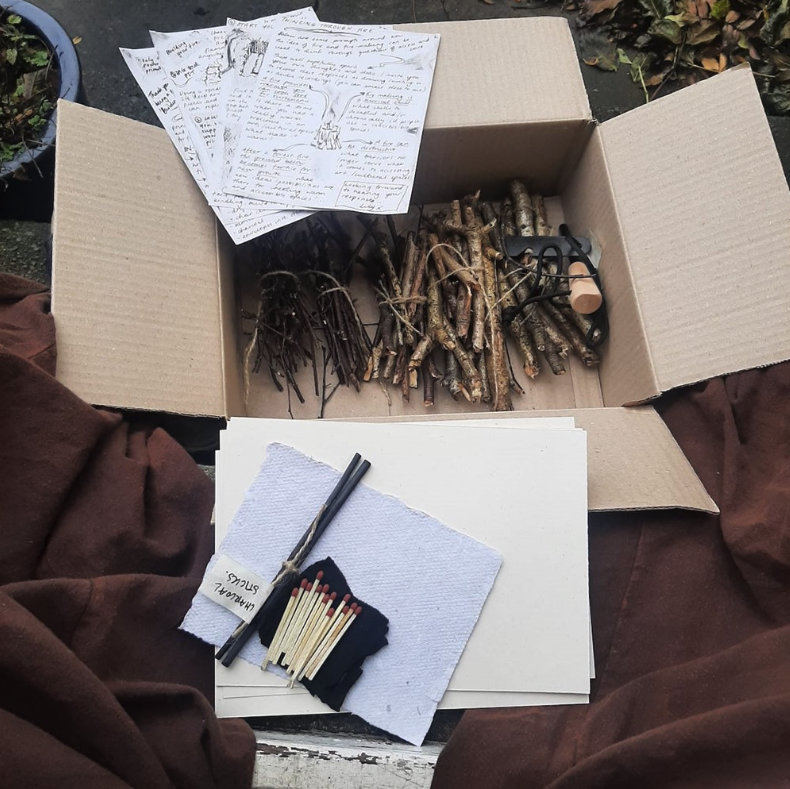
Supported by East Street Arts, Lily Lavorato collaborated with a group of disabled and chronically ill artists. Using fire as a metaphor for shared energy, they met online and around a fire to talk, draw and reflect on warmth, resilience and belonging.
Their creative exchanges were documented through drawing, text and photography, forming an intimate portrait of care, strength and interdependence.
“Continuously coming back to fire-making was a really helpful way to think through how we tend our relationships with each other and how to ensure the project reacted to the different ways that the group were able to take part. It was about listening, observing and providing what was needed to keep the conversations burning. There were so many beautiful ideas shared within the group and we’re incredibly thankful for the generosity of everyone who took part and supported the project.”
Lily Lavorato
The Human Memorial
Yuen Fong Ling
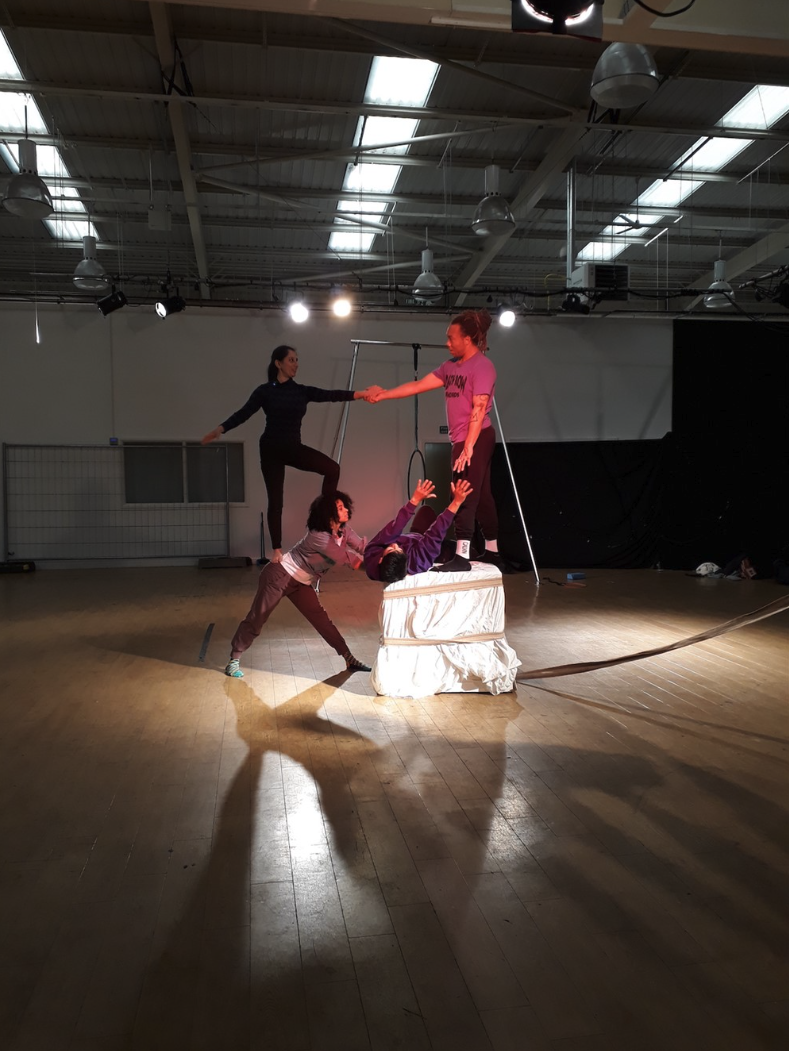
Working with the Sheffield City Council Cultural Decolonising Group, Yuen Fong Ling examined how monuments and memorials communicate power. Through workshops, sculpture and public discussion, the project questioned colonial symbolism and proposed new approaches to civic remembrance.
"It is gentleness used powerfully."
Rebecca Maddox, Sheffield City Council
Who
- Lead Fellow: Professor Amanda Ravetz, Manchester Metropolitan University
- Lead Artist: R.M. Sánchez-Camus
- Research Team: Dr Anna Macdonald, Dr Cesar Cornejo, Dr Kai Syng Tan, Dr Patrick Campbell
- Coordinator: Daniela Liberati
- Independent Evaluator: Sally Fort
- Partners: Axis Manchester Metropolitan University, Social Art Network, Arts and Humanities Research Council
- Arts Organisation Partners: Baltic Centre for Contemporary Art, East Street Arts, Nudge Community Builders, not/nowhere, National Gallery (unofficial), Sheffield City Council
Impact and Legacy
- Strengthened visibility and support for socially engaged artists working with under-represented communities.
- Produced evidence-based models for inclusive commissioning and collaboration between artists, universities and cultural institutions.
- Demonstrated how artist-led research can inform equality and inclusion policy and influence institutional behaviour.
- Continued Axis’s and Manchester Metropolitan University’s shared commitment to embedding equality, diversity and inclusion across the visual arts.
Reports
Download the full documentation:
Share this article
Connected Activities

Social Works?:Open is an artist-led journal for and about social practice art in the UK and beyond.

Join Axis
We support artists
Funding, visibility, connection and practical help.
Membership includes £15 million of Public Liability Insurance!