Social ARTery
Social ARTery created an ethical online space for artists and communities to connect during Covid-19. Through the Pioneers Programme, 20 artists co-designed the platform, shaping new models of digital care, collaboration and mutual support that continue today.

Overview
The Social ARTery was developed collaboratively by Mark Smith (Executive Director, Axis) and R. M. Sánchez Camus as part of Axis’s wider ambition to create a mutual-aid community of artists.
Before the pandemic, Axis had been exploring what a digital community platform for artists might look like. When Covid-19 struck, this work was redirected into an urgent response, building an ethical online space where artists and the communities they work with could continue to connect, create and care for one another.
Built and hosted by Axis in partnership with the Social Art Network (SAN) and supported by Arts Council England’s Emergency Fund for Organisations, the Social ARTery became a live, artist-led experiment in sustaining social practice during lockdown.
Ethical Foundations
Every pound of the £35,000 Arts Council England grant was used to pay artists directly.
All Axis staff time, project management and technical development were funded by Axis itself.
The eleven regional caretakers for the Social Art Network were also paid for their participation, ensuring fair recognition of their leadership and local support.
This approach kept the programme artist-centred and upheld its founding principle that care for artists is care for communities.
The Platform
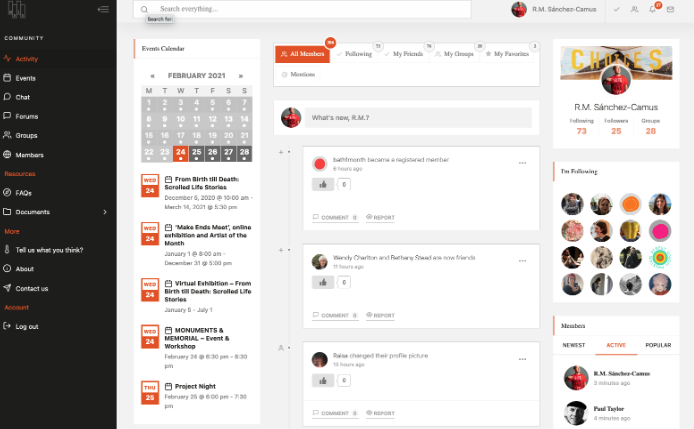
Launched in October 2020, the Social ARTery was designed as an ethical, artist-centred alternative to commercial social-media platforms, offering a safe workspace free from advertising and data mining.
It enabled users to
- create group spaces for projects
- upload media and documents
- host discussions and events
- reflect, document and archive collaborative work
Within months, participation grew by over 300 percent, hosting projects across health, wellbeing, performance, activism, digital media, food, colour, disability arts and social justice.
The Pioneers Programme
The Social ARTery Pioneers Programme was the first public phase of the project. It invited 20 artists and collectives from across England to test the platform in its Beta form and to co-develop its functions, culture and values.
Artists were nominated through the Social Art Network’s regional meet-up hubs, ensuring representation from different geographies and community contexts. Each artist received a commission fee to explore how digital tools could extend or sustain their socially engaged practice while physical contact was restricted.
Rather than a single output or exhibition, the programme was built around process, participation and reflection. Pioneers were encouraged to:
- run live sessions, workshops or discussions on the platform
- create and document projects in collaboration with participants
- share findings, resources and media with other artists
- attend mentoring and peer-learning sessions hosted by the project team
The focus was on testing what worked and what care looked like in a digital environment. Artists explored how to hold safe spaces online, how to balance openness with privacy, and how to translate community-led practice into new hybrid forms.
Each artist set up a dedicated group space on the ARTery, allowing them to build their own project environment, invite participants and experiment with collaborative tools. The cohort’s collective activity produced a living knowledge base: images, reflections, event recordings and discussions that documented both successes and challenges.
Guidance and support were provided by R. M. Sánchez Camus (Lead Artist), Daniela Liberati (Project Coordinator) and John Whall (Digital Mentor), who worked closely with each artist to nurture ideas, troubleshoot challenges and create a supportive environment for experimentation and learning.
The Pioneers met regularly to share progress and troubleshoot issues together, forming a peer-learning network that soon became as valuable as the platform itself. Many described this as a space of mutual encouragement at a time of widespread isolation and uncertainty.
“The Pioneers group gave me a reason to keep making and connecting. It reminded me that community still exists, even through a screen.”
Pioneers feedback
Feedback from these sessions directly informed the next build of the platform. Artists requested clearer navigation, more accessible media sharing and stronger peer-to-peer messaging tools. Their insights also shaped the ethical guidelines and principles that underpinned all future Social ARTery activity.
The programme’s success demonstrated that digital participation could be rooted in care, reciprocity and community agency rather than convenience or scale. It also provided Axis with critical learning about how to support artists through digital infrastructures that remain artist-led in design and purpose.
Pioneers and Participants
The following artists, groups and organisations contributed to the first and extended phases of the Social ARTery, testing, commissioning and documenting new forms of digital social practice:
Sandra Bouguerch, Cath Carver – COLOURWORXX Club / Colour Your City, Niki Colclough, Sarah Dixon and Sharon Bennett – The Women’s Art Activation System, Bronia Evers, Rik Fisher, Anna Francis, James Harrington and Jennifer Booth – SAN Sheffield / Monuments Plinths Memorials, Pete Kington – Preston Street Union, Lady Kitt, Gil Mualem-Doron, Kajal Nisha Patel, Kaajal Modi – Food Waste and Storytelling, Jo Wheeler, Harun Morrison, Tonya McMullan, Bethany Stead, Claire Doris and Dody Mead, Take A Part (Plymouth hub), Take Stock Exchange – Come to the Table, Lucy Wright – Introverts’ Fringe, Melody Sproates, Knowle West Media Centre, Sarah Li, Rebecca Thomson, Georgina Tyson, Hannah Iheoma Place, Creativity Works (Bath and Bristol hub), Sophie Huckfield, Sam Williams Studio, Lucy Lound, Emma N. J. Long, Nathan James Frost – Manchester hub
Together they represented every region of England, linking the eleven SAN regional hubs into an active online network.
Examples of Practice
- Kaajal Modi – Food Waste and Storytelling: workshops with migrant women of colour in Bristol, combining cooking, poetry and digital exchange
- Take Stock Exchange – Come to the Table: online dinners encouraging dialogue about culture and belonging
- Preston Street Union – Instructions to Live By: public poster interventions connecting strangers through shared messages
- Lady Kitt – digital craft activism exploring gender equality and care
- Rik Fisher – Play the Game: interactive, empathy-based creative play sessions
- James Harrington and Jennifer Booth – Monuments Plinths Memorials: collaborative reflection on heritage, decolonisation and civic identity
- Sarah Dixon and Sharon Bennett – The Women’s Art Activation System: feminist frameworks for peer mentoring and collective making
- Cath Carver – COLOURWORXX Club: conversations about colour, architecture and emotion connecting artists across continents
From Pioneers to Micro-Commissions
Learning from the Pioneers shaped a second phase of 20 artist micro-commissions (each £500) that continued to explore hybrid and remote working.
By early 2021, the ARTery had over 400 members and had onboarded 11 regional SAN hubs to host online peer forums, laying the groundwork for the 2022 Social Art Summit, a national review of social practice co-delivered by Axis and SAN.
The insights gathered through both phases informed further platform development. New functions for group creation, project visibility and resource sharing were introduced, and the interface was redesigned around the Pioneers’ emphasis on accessibility, simplicity and peer connection.
The learning also guided future Axis commissions for socially engaged artists, ensuring that later programmes embedded digital participation, mutual care and shared authorship as central principles rather than technical add-ons.
Evaluation and Learning
An independent evaluation by Siân Hunter-Dodsworth found that the Social ARTery became a vital space of care during lockdown.
Key outcomes:
- Artists valued its ethical and supportive culture
- Respondents reported stronger connection and confidence
- The platform fostered collaboration over competition
- Peer networks and cross-regional solidarity flourished
Challenges:
- Limited integrated video and mobile functionality
- Navigation and accessibility required improvement
- Clarity on whether the platform served artists, participants or both
The evaluation concluded that the Social ARTery was a timely and necessary innovation, showing that artist-led digital infrastructure can nurture creativity, care and resilience.
Read the Evaluation Report
The independent evaluation by Siân Hunter-Dodsworth documents the learning, feedback and recommendations.
Legacy
The Social ARTery directly influenced Axis’s continuing work around digital care, validation beyond galleries and artist-led infrastructure.
It strengthened partnership and informed the creation of Axis’s inclusive member community platform, now the foundation of our membership offer and an evolving mutual-aid network for artists.
The combined work of the Pioneers, micro-commission artists and regional caretakers defined what matters most in an artist community: care, agency, openness and shared responsibility. Their learning continues to guide Axis in building spaces that help artists support one another and sustain their practice.
Credits
- Lead Artist: R. M. Sánchez Camus
- Project Coordinator: Daniela Liberati
- Digital Mentor: John Whall
- Evaluation: Siân Hunter-Dodsworth
- Partners: Social Art Network (SAN)
- Funded by: Arts Council England Emergency Fund for Organisations (£35,000 total – 100 percent artist fees)
- Platform Build: Axis (self-financed)
Share this article
Join Axis
We support artists
Funding, visibility, connection and practical help.
Membership includes £15 million of Public Liability Insurance!